Custom gate fabrication Northwest Washington property owners invest in is where a gate stops being a product off a shelf and becomes part of the property itself. A truly custom gate is designed around your home or business, cut and welded to fit your exact opening, and finished to survive the wet, salty, freeze-thaw reality of the Pacific Northwest. That is a very different thing from a mass-produced gate ordered from a catalog and forced to fit.
Emerald Gate Systems designs and fabricates custom gates in‑house for homes, estates, farms, and commercial properties across Northwest Washington. From the first sketch through material selection, welding, finishing, and installation, every gate is built by one team that understands both the craft and the conditions it has to stand up to. This guide covers what goes into custom gate fabrication Northwest Washington owners can rely on, the materials and styles available, and how the process works from design to installation.
Quick Answer: What Is Custom Gate Fabrication?
Custom gate fabrication is the process of designing and building a gate from raw materials to fit a specific property, rather than buying a pre-made, standard-size gate. It covers the design, the material and finish selection, the cutting and welding of the frame and infill, the hardware, and the coatings that protect it.
The advantage is a gate that fits your exact opening, matches your home or building, carries the right weight for automation, and is finished for your environment. For Northwest Washington, that last point matters more than most people expect, because a gate built for a dry climate rarely lasts the same way here.
Why Custom Fabrication Beats Off-the-Shelf Gates in Northwest Washington
A stock gate is built to an average. Your property is not average.
Openings vary in width and grade. Homes range from craftsman and farmhouse to modern and estate. Driveways curve, slope, and sit on soft or rocky ground. A pre-made gate almost never fits all of that cleanly, and the compromises show up fast: awkward gaps, a gate too heavy or too light for the operator, hardware that rusts, and a look that never quite matches the house.
The climate raises the stakes. Persistent rain, damp salt air closer to the Sound, and freeze-thaw cycles in the foothills are hard on metal and hardware. A gate that was not fabricated and finished for these conditions can show rust streaks and seized hinges within a few seasons. Custom fabrication lets us choose the material, coating, and hardware specifically for where the gate will live.
Done right, a custom gate fits perfectly, looks like it belongs, moves smoothly on a properly sized operator, and holds up for years. That is the whole point of building it rather than buying it.
Gate Materials We Fabricate
Material is the biggest single decision in a custom gate, affecting the look, the strength, the weight, the maintenance, and how well it survives the Northwest.
Structural Steel
Steel is the workhorse of custom fabrication: strong, weldable into almost any design, and ideal for security and larger spans. It needs a proper coating (galvanizing and/or powder coat) to fight our moisture, but finished correctly it is durable and handsome for decades.
Ornamental and Wrought Iron
For estate and period homes, ornamental iron can be worked into scrolls, pickets, and patterns that give an entrance real presence. It is classic and strong, and with the right finish it holds up well in the region.
Aluminum
Aluminum is light and rust-proof, which makes it a smart choice near the water and easy on gate operators. It can be styled to look ornamental while shedding the corrosion problems that plague untreated steel in a wet climate.
Western Red Cedar and Wood Accents
Cedar and wood-accented gates feel right at home on a Northwest property, offering warmth and privacy. Paired with a solid steel or aluminum frame and proper sealing, wood can be both beautiful and durable.
Mixed-Material and Architectural Designs
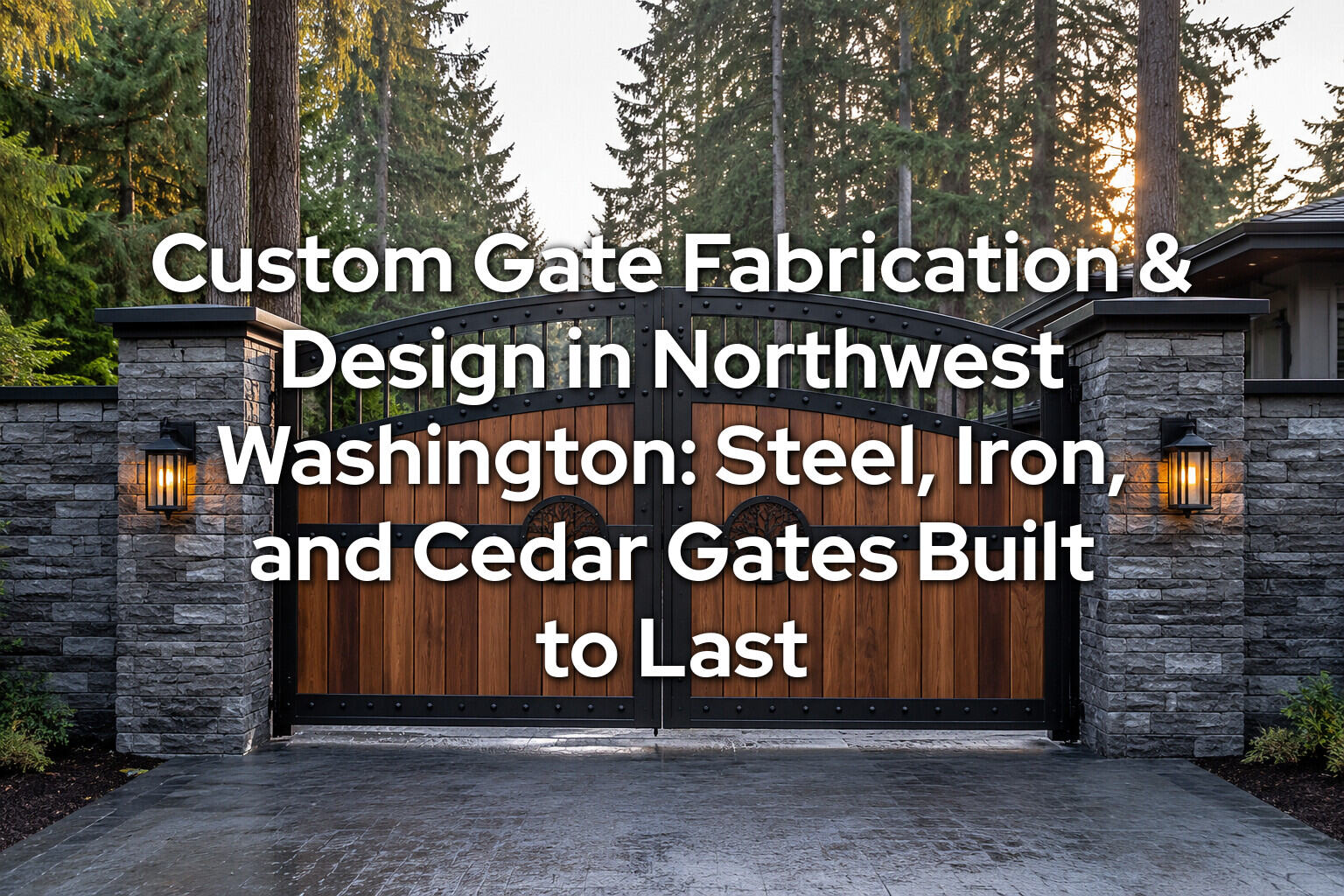
Some of the best gates combine materials, like a steel frame with cedar infill, or metal with stone accents, balancing strength, warmth, and style. Custom fabrication is what makes these combinations possible.
Gate Styles and Types We Build
Because every gate is built to order, the style follows the property and the purpose. Common custom builds include:
- Residential driveway gates
- Ornamental estate entrance gates
- Privacy gates for wooded and roadside lots
- Farm and ranch gates for equipment and livestock access
- Commercial and industrial security gates
- Pedestrian and walk-through gates
- Sliding and cantilever gates
- Single and double swing gates
- Decorative architectural gates
Each is engineered for the opening width, the daily traffic, the weight the operator has to move, and the look you are after. A wide farm gate for trailers is a different build than an ornamental estate gate, and both are different from a heavy commercial slide gate. See examples of finished work in our project portfolio.
Designing a Gate Around Your Property
Great fabrication starts with great design. Before any metal is cut, we look at the property and the goals.
Design considers the driveway width and grade, the home or building architecture, existing columns, stone, or fencing to tie into, the level of privacy you want, wind exposure, and where access controls like a keypad or intercom should sit. The gate should echo the property, not fight it, whether that means matching brick columns, continuing a fence line, or picking up a detail from the house.
This is where custom gate design and fabrication earns its place. A gate designed on paper first, around your actual entrance, avoids the surprises and compromises that come with forcing a stock gate to fit.
Have a design in mind, or need help shaping one? Emerald Gate Systems offers free on-site design consultations across Northwest Washington. Schedule a consultation and we will turn your entrance into a plan.
Built for the Pacific Northwest: Coatings and Corrosion Resistance
A custom gate is only as good as its finish, and in this climate the finish is what keeps it looking sharp.
Moisture is relentless here, so corrosion protection is built in from the start, not added as an afterthought. Depending on the material and location, that can mean hot-dip galvanizing, quality powder coating, and marine-grade or stainless hardware for hinges, fasteners, and rollers, which are usually the first parts to fail on a cheap gate near the water.
Spending a little more on the right coatings and hardware up front is almost always cheaper than the rust repairs that come from cutting that corner. This is exactly the kind of regional know-how that separates a gate fabricated for the Northwest from a gate ordered off a national catalog.
Our In-House Fabrication Process
Every custom gate we build follows a clear path from idea to installed:
- Design consultation: we walk the property, discuss goals, and capture measurements and details.
- Design and CAD: the gate is drawn to your opening and style, with materials, dimensions, and hardware specified.
- Material selection: steel, iron, aluminum, cedar, or a mix is chosen for the look and the environment.
- Cutting and welding: the frame and infill are cut and welded in-house using professional techniques for a clean, strong build.
- Finishing: the gate is coated and the hardware selected for long-term corrosion resistance.
- Installation and automation: the gate is set, aligned, and, if desired, paired with an operator and access controls.
- Testing and support: every gate is tested, and ongoing service keeps it running for years.
Because the same team handles design, fabrication, and installation, the finished gate matches the plan and the pieces work together.
Why In-House Fabrication Matters
Many gate projects pass through several hands: one company fabricates, another installs, an electrician wires the operator, and someone else sets up access control. When something does not line up, accountability gets blurry.
Emerald Gate Systems keeps design, fabrication, installation, automation, and service under one roof. That means the team drawing the gate understands the operator it will carry, the crew welding it knows how it will be installed, and there is one accountable point of contact from first sketch to final tune-up. The result is better quality control and a smoother project.
Custom Fabrication for Every Property Type
A custom gate serves very different needs depending on the property. Homeowners often want privacy, curb appeal, and a finished entrance through residential gate installation. Estate owners want ornamental craftsmanship that reflects the home. Farms and ranches need wide, durable gates that handle trailers and equipment. Businesses need heavy-duty, secure entrances through commercial gate solutions. Custom fabrication is what lets one shop build correctly for all of them.
Signs a Custom Gate Is the Right Choice
A custom-fabricated gate is worth it when a stock gate simply will not do the job. Consider custom fabrication if:
- Your opening is an unusual width, or the driveway slopes or curves
- You want the gate to match a specific home or building style
- You need to tie into existing columns, stone, or fencing
- Security or heavy daily use demands a stronger build
- You want a particular material, finish, or ornamental detail
- The gate will be automated and must carry the right weight and balance
- You are near the water and need real corrosion resistance
Safety and Construction Standards
A well-fabricated gate is also a safe one, especially once it is automated. Recognized standards such as ASTM F2200 cover how automated vehicular gates should be constructed, including slide, swing, and pivot gates, and operators are expected to include entrapment protection that reverses the gate when something is in the path. Building to these standards from the fabrication stage keeps the finished system safe for families, employees, and visitors.
How Emerald Approaches a Custom Gate Project
A strong custom gate is mostly decided before the first cut. We start with the property and your goals, design the gate around them, choose materials and finishes for both the look and the Northwest climate, fabricate it in-house, and install and, where wanted, automate it. After that, ongoing maintenance and repair keeps the gate performing for the long haul. One team, one plan, one accountable result.
Ready for a gate built for your property? Emerald Gate Systems designs and fabricates custom gates across Northwest Washington and the greater Puget Sound region. Schedule a free consultation to start the design.
Explore the craftsmanship in more detail across our blog: custom gate design for Puget Sound homes and businesses, ornamental and wrought iron gate installation, and the step-by-step custom gate fabrication design process.
Frequently Asked Questions
What is custom gate fabrication?
Custom gate fabrication is designing and building a gate from raw materials to fit a specific property, rather than buying a standard pre-made gate. It includes the design, material and finish selection, welding, hardware, and coatings, all tailored to your opening, style, and environment.
What materials can a custom gate be made from?
Common materials include structural steel, ornamental or wrought iron, aluminum, Western Red Cedar and wood accents, and mixed-material or architectural combinations. The best choice depends on the look you want, the strength needed, the automation plan, and how close the gate is to coastal moisture.
How long does a custom gate take to build?
Timelines vary with the design complexity, material, and finish, but a custom gate typically runs a few weeks from approved design through fabrication and installation. Ornamental and highly detailed gates take longer. You get a realistic schedule with your quote.
Is a custom gate worth it compared to a stock gate?
For most properties in Northwest Washington, yes. A custom gate fits your exact opening, matches your property, carries the right weight for automation, and is finished for the local climate. Those factors mean it looks better and lasts longer than a one-size-fits-all gate.
Can a custom gate be automated?
Yes. Custom gates are designed with automation in mind, so the weight, balance, and hinging suit the operator. Emerald Gate Systems fabricates, installs, and automates gates in-house, so the gate and the operator are matched from the start.
How do you keep a custom gate from rusting in the Northwest?
Corrosion resistance is built in through the right material and finish, such as galvanizing, quality powder coating, and marine-grade or stainless hardware. Choosing corrosion-resistant materials and finishes up front, plus occasional maintenance, keeps a gate looking sharp for years in our wet climate.
What areas do you serve?
Emerald Gate Systems designs and fabricates custom gates across Skagit County, Whatcom County, Snohomish County, Whidbey and Camano Islands, and the greater Puget Sound region throughout Northwest Washington.
Start Your Custom Gate
Whether you want an ornamental estate entrance, a durable farm gate, a secure commercial entry, or a clean modern driveway gate, Emerald Gate Systems can design and fabricate it specifically for your property and the Pacific Northwest. Contact Emerald Gate Systems to schedule a free on-site consultation and design a gate built to last. Locally owned, fabricated in-house, and here for the long haul.