Welding and Fabrication Services for Custom Gates in Washington State
Learn why professional welding matters for strong, durable, secure gate systems built for Washington State weather.
A custom gate is only as strong as the work behind it. The design matters. The materials matter. The operator, keypad, intercom, camera, and access control system all matter too. But if the gate is not welded, fabricated, reinforced, and finished correctly, everything else is built on a weak foundation.
A gate has to do more than look good from the road. It has to carry its own weight, open and close smoothly, handle wind, rain, moisture, gravel, daily use, and years of movement. For an automatic gate, it also has to work with operators, hinges, rollers, brackets, sensors, and access control equipment without twisting, sagging, dragging, or pulling out of alignment.
What Are Welding and Fabrication Services for Custom Gates?
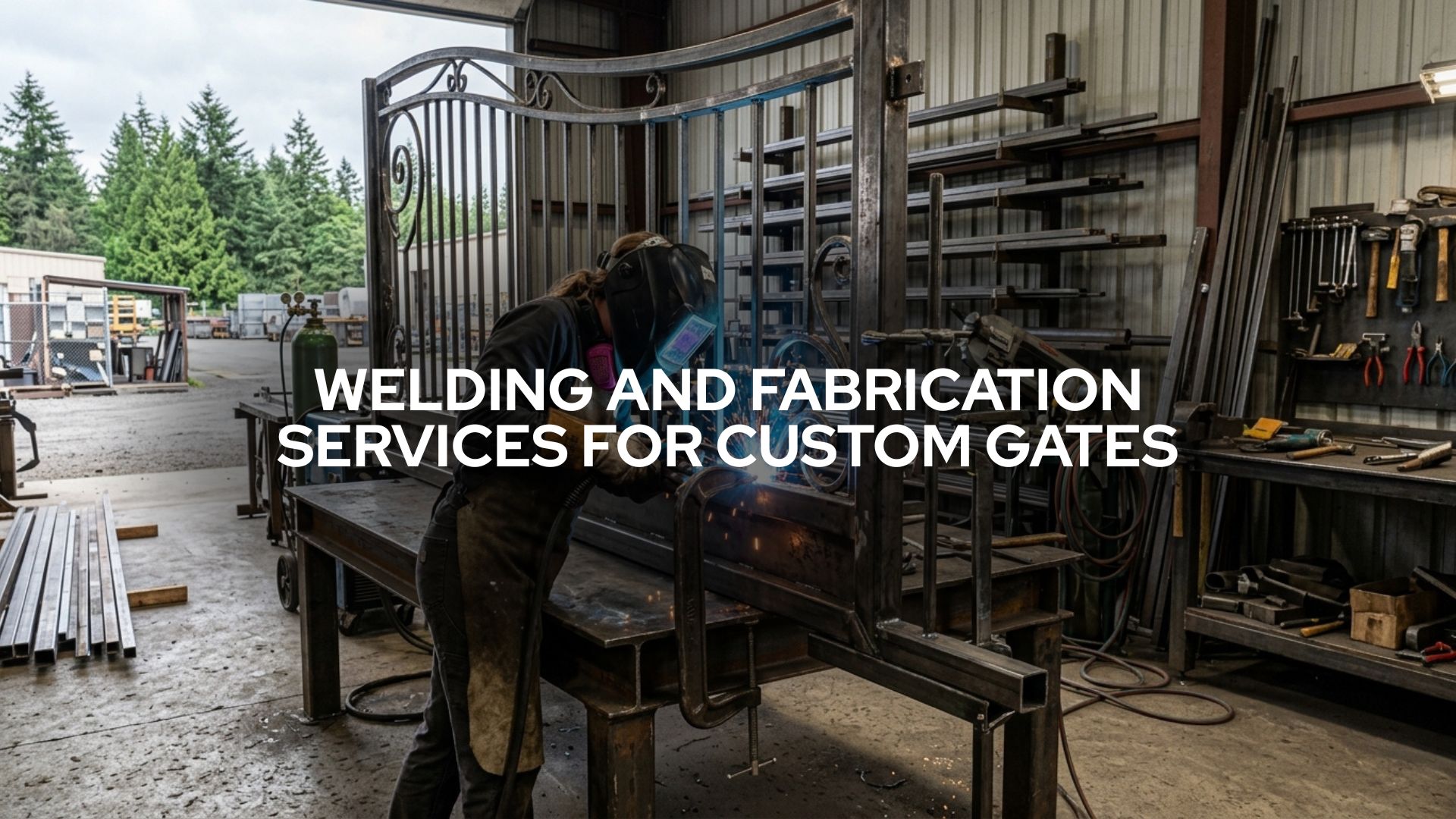
Welding and fabrication services involve building, repairing, modifying, reinforcing, or finishing metal gate systems so they fit the property and perform correctly. Fabrication is the full process of creating the gate structure. Welding is the skilled joining of metal components that gives the gate its strength and shape.
- Measuring the entrance
- Designing the gate frame
- Cutting steel/iron/aluminum
- Welding frame & supports
- Adding pickets, panels, rails
- Reinforcing operator mounts
- Building hinges & brackets
- Preparing for automation
- Finishing for weather resistance
- Repairing damaged sections
- Modifying existing gates
- On-site installation
Why Professional Welding Matters
A gate moves. It carries weight. It deals with pressure: pushed by wind, pulled by an operator, bumped by vehicles, used dozens of times a day, exposed to rain year-round.
Poor Welding Can Lead To
- Weak joints
- Cracking
- Gate sagging
- Frame twisting
- Operator strain
- Uneven movement
- Alignment problems
- Premature repairs
- Safety concerns
- Shorter lifespan
For automatic gates this matters even more. A motorized operator repeats the same movement every time. If the gate is not square, balanced, and properly reinforced, the operator works harder than it should, leading to breakdowns and expensive repairs.
Custom Fabrication vs. Standard Installation
A standard gate may work for a basic opening. But many Washington State properties are not basic. Some driveways are sloped. Some need room for trailers, tractors, or commercial traffic. Some need to match fencing, columns, or architecture.
Choose Custom Fabrication When
- Entrance has unusual dimensions
- Driveway is sloped or uneven
- Stronger security gate needed
- Gate will be automated
- Design must match property
- Frequent daily use
- Commercial-grade solution
- Special brackets/hinges/support
- Long-term system, not a temp fix
Common Gates That Need Welding and Fabrication
Custom Driveway Gates
Steel, iron, aluminum, wood-and-metal, swing, sliding, or automatic, balancing appearance and daily function.
Commercial Security
Sliding, cantilever, industrial, parking, storage, warehouse, equipment yard: heavier framing, stronger welds, access control integration.
Farm & Agricultural
Wider openings, reinforced hinges, strong posts, automation compatibility, equipment-friendly layouts, durable finishes.
HOA & Managed
Phone entry, RFID, keypads, cameras, resident access, vendor entry, preventive maintenance, attractive and reliable.
Custom Pedestrian
Matching foot-traffic gates for homes, schools, apartments, commercial sites, and managed properties.
Gate Materials Used in Fabrication
Steel
Strong, versatile, dependable. Works for driveways, commercial, security, sliding, cantilever, farm, and industrial gates.
Iron
Classic, ornamental look: popular for residential driveways, estate entrances, and business properties.
Aluminum
Lighter than steel, good for residential and automatic gates where less weight helps the operator.
Wood & Metal
Metal frame + wood warmth: popular for Pacific Northwest homes, farms, and rural properties.
How Welding Supports Automatic Gate Systems
Automatic gates need more than a nice-looking frame. They need a gate structure that works with automation. Every cycle puts force on the frame, hinges, brackets, rollers, posts, and mounting points.
- Keeps the frame square
- Reinforces operator mounts
- Reduces flex & twisting
- Supports hinges and rollers
- Helps gate move smoothly
- Prevents early operator strain
- Improves reliability
- Cleaner access control integration
See our automatic gate installation and repair in Washington State page.
Welding for Gate Repair and Reinforcement
Not every gate needs to be replaced. Sometimes professional welding can repair or reinforce an existing gate.
- Fixing cracked welds
- Rebuilding damaged frames
- Repairing bent sections
- Reinforcing weak corners
- Replacing broken hinges
- Repairing brackets
- Strengthening operator mounts
- Fixing vehicle impact damage
- Modifying for automation
- Rebuilding worn metal components
Repair Makes Sense When
- The frame is mostly solid
- Damage is limited to one section
- The gate still fits the opening
- The owner wants to keep the design
- It can be safely reinforced
- Automation can be supported after repair
Replacement Is Better When
- Gate is badly rusted
- Frame is twisted or unsafe
- Repeated failures
- Design no longer fits
- Repair near replacement cost
- Cannot support automation safely
Fabrication for Sliding Gates
Sliding gates move sideways across an entrance: common for commercial properties, storage yards, apartments, tight driveways, sloped entrances, and secure vehicle access.
- Gate weight
- Frame strength
- Roller support
- Track or cantilever design
- Operator attachment
- Gate guides
- Wind exposure
- Security needs
- Access control equipment
- Long-term alignment
Fabrication for Swing Gates
Swing gates open inward or outward like a door: common for homes, farms, estates, private roads, and some commercial properties.
- Gate width
- Gate weight
- Hinge strength
- Post support
- Wind load
- Operator arm placement
- Ground clearance
- Gate balance
- Alignment
- Long-term sag prevention
Fabrication for Cantilever Gates
Cantilever gates are sliding gates that do not roll on a ground track. They are supported by posts and rollers: a strong option for Washington State properties because ground tracks collect gravel, mud, leaves, and debris.
- Longer frame design
- Counterbalance section
- Roller support
- Structural rigidity
- Commercial-grade hardware
- Operator compatibility
- Site clearance
- Gate weight
- Security requirements
Welding and Fabrication for Washington State Weather
Washington State weather is one of the biggest reasons professional fabrication matters. Gates here face heavy rain, moisture, wind, gravel, mud, soft ground, tree debris, and coastal air near island and waterfront properties.
- Proper material selection
- Strong welded joints
- Drainage-minded design
- Protective finishes
- Durable hardware
- Weather-rated automation
- Access control placement
- Maintenance access
Finish Work: Protecting the Gate
After fabrication, the finish protects the gate and creates the final appearance.
- Primer
- Paint systems
- Powder coating
- Protective coatings
- Specialty colors
- Rust-resistant treatments
Welding, Fabrication, and Access Control Planning
A custom gate should be planned with access control in mind. Fabrication affects where equipment can be mounted, how clean the installation looks, and how well the full system works.
- Keypads
- Remote transmitters
- Phone entry
- Video intercoms
- Card readers
- RFID
- Cameras
- Vehicle detection loops
- Smart access
- Safety sensors
See our custom gate access control systems in Washington State page.
Why Strong Fabrication Matters for Commercial Gates
Commercial gates work harder than residential gates. They may open for employees, vendors, customers, delivery trucks, security staff, tenants, and service vehicles all day.
- Stronger framing
- Better reinforcement
- Heavy-duty hardware
- Operator-ready structure
- Durable welds
- Access control compatibility
- Safety sensor planning
- Maintenance-friendly design
Why Strong Fabrication Matters for Residential Gates
Residential gates still need serious fabrication, even when appearance is the main priority. A driveway gate deals with daily use, wind, rain, sloped ground, vehicle access, deliveries, and automation.
Why Strong Fabrication Matters for Farms
Farm gates need to be built for use, not just appearance. They handle trucks, trailers, tractors, gravel, mud, livestock areas, and wide entrances.
- Wide enough
- Strong enough
- Easy to operate
- Durable in weather
- Automation compatible
- Simple to maintain
- Practical for equipment
Common Welding and Fabrication Mistakes
- Using weak or undersized materials
- Poor welding quality
- Not designing for automation
- Ignoring gate weight vs hinges/operators
- Forgetting about Washington weather
- Skipping access control planning
- Not planning for maintenance access
How the Fabrication Process Works
- Site ReviewMeasure and evaluate width, slope, space, ground, vehicle access, power, and security needs.
- Gate DesignPlan gate type, material, style, height, width, and function.
- Automation PlanningPlan operator, access control, safety sensors, and mounting points before fabrication.
- Material PreparationMetal is selected, measured, cut, and prepared for welding.
- Welding & AssemblyFrame and components welded together, reinforced, checked, and prepared for finish.
- Finish WorkGate is cleaned, coated, painted, or powder coated based on project needs.
- InstallationGate installed, aligned, mounted, and tested.
- Automation & Access SetupOperators, keypads, remotes, intercoms, cameras, sensors, card readers installed and tested.
- Final WalkthroughOwner shown how the gate works, how access is managed, and what maintenance to expect.
Maintenance for Welded and Fabricated Gates
- Check weld areas for cracks
- Inspect hinges/rollers
- Test alignment
- Clean debris
- Inspect finish wear
- Check for rust/corrosion
- Test operators
- Check access devices
- Inspect safety sensors
- Lubricate moving parts
- Adjust hardware
- Check posts and supports
See our gate repair and maintenance services in Washington State page.
How Much Do Welding and Fabrication Services Cost?
- Gate width & height
- Material choice
- Swing vs sliding
- Cantilever design
- Decorative details
- Commercial-grade reinforcement
- Welding complexity
- Finish type
- Posts & hardware
- Operator mounting
- Access control
- Repair vs new fabrication
- Site preparation
- Installation
Why Local Experience Matters
Welding and fabrication for gates in Washington State requires local judgment. Gates here deal with rain, moisture, gravel, soft ground, wind, tree cover, coastal air, farm use, commercial traffic, and long wet seasons.
Work With Emerald Gate Systems
Whether you need a new custom gate, a welded repair, a reinforced frame, a commercial gate upgrade, or an automated access system, the right result starts with strong fabrication.
Get Strong Welding & Fabrication for Your Gate
Call today or schedule a free consultation. We design, fabricate, install, automate, repair, and maintain gate systems built for Washington State conditions.
Considering a one-of-a-kind entrance? Our guide to custom gate fabrication in Northwest Washington covers custom steel, iron, and cedar gate design and fabrication.
FAQ: Welding and Fabrication for Custom Gates
What are welding and fabrication services for custom gates?
Welding and fabrication services involve building, repairing, modifying, and reinforcing metal gates. This can include cutting, welding, framing, finishing, installing, and preparing gates for automation or access control.
Why does welding quality matter for gates?
Welding quality matters because gates carry weight, move repeatedly, and deal with weather. Weak welds can crack, sag, twist, or fail over time.
Can a damaged gate be repaired with welding?
Yes, many damaged gates can be repaired with welding if the frame is still structurally sound. Repairs may include fixing cracked welds, bent sections, broken hinges, brackets, or impact damage.
When should a gate be replaced instead of repaired?
Replacement may be better if the gate is badly rusted, twisted, unsafe, repeatedly failing, or no longer fits the property’s needs.
What materials are best for custom gate fabrication?
Steel, iron, aluminum, and wood-metal combinations are common. The best material depends on the gate size, style, security needs, automation plan, and weather exposure.
Can fabricated gates be automated?
Yes, custom fabricated gates can be built for automatic operation with swing gate operators, sliding gate operators, keypads, remotes, intercoms, cameras, card readers, RFID, and smart access systems.
Should automation be planned before welding and fabrication?
Yes. If a gate will be automated, operator mounts, gate weight, reinforcement, safety sensors, and access control equipment should be planned before fabrication is complete.
What is the best gate for commercial properties?
Commercial properties often benefit from sliding gates, cantilever gates, or heavy-duty swing gates with strong fabrication, access control, cameras, sensors, and preventive maintenance.
What is the best gate for a residential driveway?
The best residential gate depends on the driveway. Swing gates work well for flat driveways with room to open. Sliding gates work better for tight spaces, slopes, or driveways close to the road.
Can Emerald Gate Systems fabricate custom farm gates?
Yes. Emerald Gate Systems works with farm and rural gate systems, including wide openings, durable frames, automation, keypad access, and practical layouts for equipment and service vehicles.
Do welded gates need maintenance?
Yes. Welded gates should be inspected for alignment, hinge or roller wear, finish damage, rust, cracks, operator strain, and access control issues.
Can welding help reinforce an automatic gate?
Yes. Welding can reinforce weak gate frames, operator mounting areas, hinges, brackets, and damaged sections so the gate can support automatic operation more reliably.
What finish is best for a fabricated gate in Washington State?
The best finish depends on the material and exposure. Paint systems, primers, powder coating, and protective coatings may help protect the gate from moisture and weather.
Can cameras and access control be added to a custom fabricated gate?
Yes. Keypads, intercoms, cameras, card readers, RFID systems, remotes, sensors, and smart access controls can often be integrated into a custom gate system.
Who provides welding and fabrication services for gates in Washington State?
Emerald Gate Systems provides welding, fabrication, custom gate installation, automation, access control, repair, and maintenance services across Washington State, with a strong focus on Northwest Washington State, Sedro-Woolley, Skagit County, Whatcom County, Snohomish County, island communities, and the greater Puget Sound region.
How do I schedule a custom gate fabrication consultation?
Call (360) 657-9975 or Schedule a Free Consultation Call with Emerald Gate Systems to discuss welding, fabrication, custom gates, automatic gate installation, repair, or access control for your Washington State property.