A simple homeowner and property manager guide to electric gates, automatic gate operators, access controls, and smart entry systems.
If you have been looking into driveway gates, commercial gates, HOA entry systems, or access control for your property, you have probably seen the terms electric gate and automatic gate used almost everywhere.
Sometimes people use them like they mean the same thing. Sometimes gate companies, property managers, builders, and homeowners use them differently. That can make the buying process confusing, especially if you are trying to figure out what your property actually needs.
Here is the simple answer: an electric gate usually refers to a gate powered by an electric motor, while an automatic gate refers to the full gate system that opens and closes automatically using an operator, controls, safety devices, and access equipment.
In everyday conversation, most people use both terms to describe a motorized gate that opens without being pushed by hand. But when you are planning a real project, the difference matters.
A gate is not just a panel at the end of a driveway. A complete system may include a swing gate or sliding gate, a gate operator, keypad, remotes, intercom, camera, vehicle sensors, access control panel, safety devices, and backup power. For homes, farms, HOAs, commercial properties, and managed sites across Washington State, choosing the right setup helps the gate work better, last longer, and fit the way the property is actually used.
Emerald Gate Systems designs, fabricates, installs, automates, and services custom gates and access control systems across Northwest Washington, Sedro-Woolley, Skagit County, Whatcom County, Snohomish County, island communities, and the greater Puget Sound region. As a locally owned company serving Washington since day one, Emerald builds gate systems for Pacific Northwest conditions, not generic one-size-fits-all entrances.
Quick Answer: Electric Gate vs. Automatic Gate
An electric gate is a gate that uses electricity to power a motor or operator.
An automatic gate is a gate system that opens and closes automatically through controls such as remotes, keypads, intercoms, sensors, card readers, phone entry systems, or smart access devices.
In most residential and commercial conversations, people use both terms to describe the same general idea: a gate that opens without someone manually pushing or pulling it. But technically, the automatic gate includes more than just electric power. It includes the full system that controls how the gate operates.
What Is an Electric Gate?
An electric gate is a gate that is powered by an electric motor. The motor moves the gate open and closed. Electric gates can be used for:
- Residential driveways
- Farm entrances
- Commercial properties
- Apartment communities
- HOAs
- Schools
- Storage yards
- Parking areas
- Industrial sites
- Managed properties
An electric gate can be a swing gate, sliding gate, cantilever gate, or custom fabricated gate. The word “electric” mainly describes how the gate moves. Instead of opening by hand, it uses powered equipment. A basic electric gate may open with a remote. A more advanced electric gate may connect to keypads, cameras, intercoms, badge readers, vehicle loops, security systems, and access control software.
What Is an Automatic Gate?
An automatic gate is a gate that opens and closes automatically using a gate operator and control system. The word “automatic” focuses more on the way the system functions. The gate receives a signal, the operator activates, the gate moves, and safety devices help control movement.
A complete automatic gate system may include:
- Gate operator
- Control board
- Remote controls
- Keypad entry
- Phone entry system
- Video intercom
- Card reader
- RFID reader
- Vehicle detection loops
- Photo eye sensors
- Safety edges
- Camera integration
- Battery backup
- Access control programming
For most property owners, an automatic gate is not just about the motor. It is about convenience, security, safety, and control.
Are Electric Gates and Automatic Gates the Same Thing?
In everyday language, yes, people often use the terms the same way. If a homeowner says they want an electric driveway gate, they usually mean they want an automatic gate that opens with a remote, keypad, or smart entry system. But when planning the system, there is a useful difference.
An electric gate is about power and movement. An automatic gate is about operation and control.
For example, a gate can be electric because it has a powered motor. But it becomes a true automatic gate system when it includes the controls, safety devices, and access features that allow it to open and close properly without manual effort. That difference matters when you are comparing quotes. One proposal may only include a basic motorized gate. Another may include a complete automatic gate system with keypads, sensors, intercoms, vehicle loops, and safety equipment. Those are not the same project.
Why the Difference Matters for Washington State Properties
In Washington State, the details matter because gates work in real outdoor conditions. A gate in Northwest Washington may deal with rain, gravel, soft ground, wind, tree debris, long private driveways, coastal moisture, farm traffic, commercial vehicles, and power interruptions. If the system is not planned properly, it may become unreliable.
That is why property owners should look beyond the label. Whether someone calls it an electric gate or an automatic gate, the better question is: What does the full system include, and will it work for this property?
For a residential driveway near Sedro-Woolley, the right system may be a custom swing gate with remotes, keypad access, and camera visibility. For a commercial site in the Puget Sound region, the better fit may be a sliding gate with a heavy-duty operator, card reader, vehicle loops, safety sensors, and scheduled access control. For a farm in Skagit or Whatcom County, the priority may be a wide, durable gate that handles trucks, trailers, equipment, rain, and gravel without constant service issues.
Main Parts of an Electric or Automatic Gate System
A reliable gate system is made from several parts working together.
The Gate
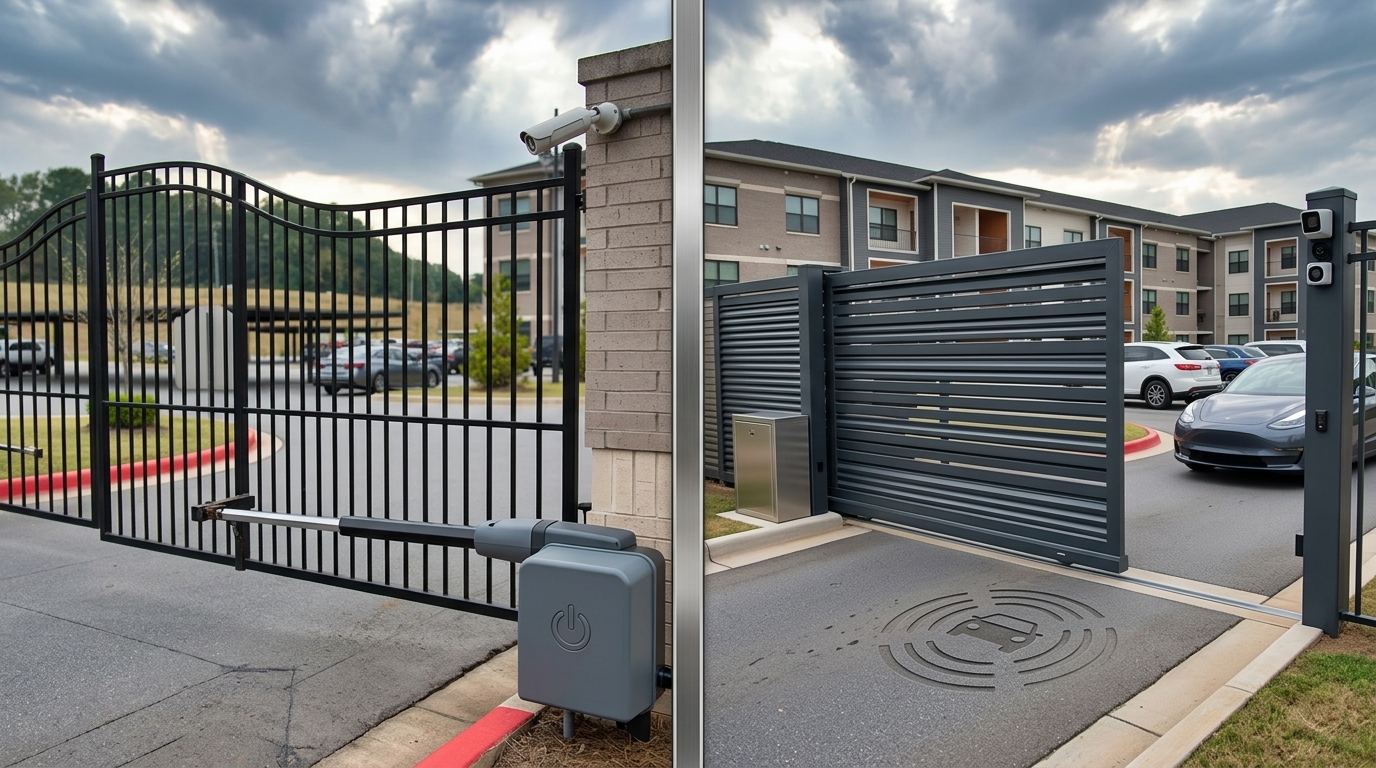
The gate is the physical barrier. It may be made from steel, aluminum, iron, wood, or a combination of materials. Common gate styles include:
- Swing gates
- Sliding gates
- Cantilever gates
- Custom driveway gates
- Commercial security gates
- Farm gates
- Ornamental iron gates
- Aluminum gates
The gate should match the property, but it also needs to match the operator and access system.
The Gate Operator
The gate operator is the motorized unit that opens and closes the gate. Swing gates use swing gate operators. Sliding gates use slide gate operators. Heavy commercial gates need operators rated for higher use and heavier loads. The operator should be chosen based on gate size, gate weight, gate type, daily use, wind exposure, site conditions, and residential or commercial needs. An undersized operator can wear out early, especially on high-use properties.
The Access Control
Access control decides who can open the gate and how they get in. Options include:
- Keypads
- Remotes
- Phone entry systems
- Intercoms
- Video entry systems
- Card readers
- Badge access
- RFID systems
- Mobile access
- Timed access schedules
For homes, access control may be simple. For commercial and managed properties, it may need to support employees, residents, vendors, deliveries, visitors, and emergency responders.
The Safety Devices
Automatic gates need safety devices to help prevent damage and reduce risk. Safety equipment may include photo eyes, safety edges, vehicle detection loops, obstruction detection, warning signs, emergency release options, and proper gate travel limits. Safety is not something to skip. A gate is a heavy moving system, and it needs to be installed and maintained carefully.
The Power Source
Most automatic gates use standard electrical power. Some properties may also use battery backup or solar-assisted options when appropriate. For rural properties, long driveways, farms, and remote entrances, power planning is a major part of the project.
Electric Gate Operators: What They Actually Do
The operator is the part of the gate system that does the physical work. It receives a signal and moves the gate. For example, when you press a remote, enter a keypad code, or approve a visitor through an intercom, the control system sends a signal to the operator. The operator then opens or closes the gate.
Swing Gate Operators
Swing gate operators open a gate inward or outward like a door. They are common for homes, farms, and residential driveways. Swing operators work well when the entrance has enough room for the gate to open safely.
Slide Gate Operators
Slide gate operators move a gate sideways across the entrance. They are often used for commercial properties, apartment communities, parking areas, storage yards, and tight driveway layouts. Sliding gate operators are a strong option when space is limited or the property needs a secure, efficient entrance.
Commercial Gate Operators
Commercial operators are built for heavier use. They may be used at warehouses, schools, managed properties, industrial yards, parking areas, and high-traffic entrances. Commercial gate operators should be selected based on duty cycle, gate weight, gate size, traffic volume, and site security needs.
Smart Entry Systems and Access Control
A modern automatic gate can do much more than open with a remote. Smart entry systems allow property owners and managers to control access in a more organized way. This is especially useful for properties with multiple users.
Keypad Entry
Keypads are one of the most common access options. A person enters a code, and the gate opens. Keypads work well for homes, farms, small businesses, service entrances, and some managed properties.
Remote Controls
Remote transmitters are simple and convenient. They are commonly used for residential driveway gates and private entrances.
Phone Entry Systems
Phone entry systems allow visitors to call a homeowner, tenant, office, or manager from the gate. This is a strong option for apartments, HOAs, office buildings, and managed properties.
Video Intercoms
Video intercoms let you see and speak with the person at the gate before granting access. This is helpful for residential properties, commercial entrances, schools, offices, and gated communities.
Card Readers and Badge Access
Card readers are commonly used for commercial buildings, employee entrances, parking areas, and institutional properties. They make it easier to add, remove, and manage users.
RFID Access
RFID systems can allow faster vehicle entry. They are often used for communities, parking lots, fleet yards, and managed properties where approved vehicles need regular access.
Camera Integration
Cameras add visibility and can connect the gate to a larger security system. For Washington properties with long driveways, commercial yards, or managed entry points, camera visibility can make the gate much more useful. Learn more about access control systems for automatic gates in Washington State.
Which Is Better: Electric Gate or Automatic Gate?
For most property owners, the better choice is a complete automatic gate system, not just a powered gate. A basic electric gate may open and close with a motor, but a complete automatic gate system is designed around daily use, access control, safety, and long-term reliability.
Choose a complete automatic gate system if you want:
- Remote access
- Keypad entry
- Visitor management
- Intercom communication
- Camera visibility
- Access control for multiple users
- Safer gate movement
- Better security
- Commercial-grade reliability
- Easier property management
A gate should do more than move. It should support how the property functions every day.
Residential Electric and Automatic Gates
For homeowners, electric and automatic gates are usually about privacy, convenience, and peace of mind. A residential automatic gate can help control who enters the driveway, reduce unwanted visitors, improve curb appeal, and make daily access easier during rainy Washington weather.
Best Residential Gate Features
- Remote controls
- Keypad entry
- Video intercoms
- Camera integration
- Battery backup
- Custom gate design
- Swing gate automation
- Sliding gate automation
A home gate should be easy to use. It should not feel like a complicated commercial system unless the property truly needs that level of control.
When Homeowners Should Consider Automation
- The driveway is long
- The property feels too open
- You want better privacy
- You want to open the gate from your vehicle
- You receive frequent visitors or deliveries
- You want a more finished entrance
- You already have a manual gate and want easier access
Commercial Automatic Gates
Commercial properties usually need more than a basic electric gate. A business may need to control employees, vendors, deliveries, customers, service vehicles, after-hours access, and restricted areas. That requires a planned gate system with the right operator and access control setup.
Best Commercial Gate Features
- Heavy-duty sliding gates
- Cantilever gates
- Commercial gate operators
- Card readers
- Keypads
- Vehicle detection loops
- Camera integration
- Intercoms
- Timed access schedules
- Preventive maintenance
- Emergency repair support
For commercial properties, reliability matters. A gate that stops working can affect security, deliveries, employee access, and daily operations.
HOA and Managed Property Gate Systems
HOAs, apartment communities, condos, and managed properties need automatic gates that are easy for residents to use and simple for managers to control. A managed gate system should support:
- Resident access
- Guest entry
- Vendor codes
- Delivery access
- Emergency access
- Directory updates
- Phone entry
- RFID or card access
- Camera visibility
- Maintenance planning
For these properties, the access control system is just as important as the gate itself. If codes are hard to update or visitors cannot reach residents, the system becomes frustrating quickly.
Farm and Rural Electric Gates
Farms and rural properties across Washington State often have different gate needs than suburban homes or commercial buildings. A farm gate may need to handle wide equipment, gravel roads, mud, trailers, livestock areas, service vehicles, and long access points.
Best Farm Gate Features
- Wide gate openings
- Durable swing or sliding gates
- Heavy-duty operators
- Keypad access
- Remote controls
- Battery backup
- Simple access for workers and vendors
- Equipment-friendly layouts
For rural properties, the gate should be strong, simple, and dependable. A complicated system that fails during busy workdays is not helpful.
Sliding Electric Gates vs. Swing Electric Gates
Both sliding and swing gates can be electric or automatic. The right choice depends on the site.
Sliding Electric Gates
Sliding electric gates move sideways. They are a good choice for tight spaces, commercial entrances, sloped driveways, and high-security properties. They are often used for:
- Commercial yards
- Storage facilities
- Apartment communities
- Parking areas
- Industrial properties
- Short driveways
- Sloped entrances
Swing Electric Gates
Swing electric gates open inward or outward. They are a good choice for homes, estates, farms, and properties with enough room for the gate to open. They are often used for:
- Residential driveways
- Rural homes
- Estate entrances
- Decorative gates
- Farm entrances
- Private roads
The best way to choose is to look at the driveway layout, available space, slope, traffic flow, and appearance goals.
Common Mistakes When Buying an Electric Gate
A gate system is a long-term investment. Avoiding common mistakes can save time, money, and frustration.
Mistake 1: Only Thinking About the Gate
The gate matters, but the operator, safety devices, access control, and installation quality matter just as much.
Mistake 2: Choosing the Cheapest Operator
A low-cost operator may not be strong enough for the gate or the daily use. This can lead to breakdowns and early replacement.
Mistake 3: Ignoring Washington Weather
Rain, moisture, gravel, wind, and debris should influence equipment selection and installation planning.
Mistake 4: Forgetting About Visitors
A gate needs a plan for guests, deliveries, emergency access, vendors, employees, or residents.
Mistake 5: Skipping Safety Devices
Automatic gates need proper safety equipment. Sensors, vehicle loops, and correct operator settings help the system work safely.
Mistake 6: Not Planning for Maintenance
Gate systems need service over time. Preventive maintenance helps reduce emergency repairs and keeps the system reliable.
Electric Gate Repair and Maintenance
Electric and automatic gates need maintenance because they include moving parts, electrical systems, and access devices. Common repair issues include:
- Gate not opening
- Gate not closing
- Gate stopping halfway
- Noisy operator
- Remote not working
- Keypad failure
- Intercom problems
- Sensor misalignment
- Gate dragging
- Worn hinges or rollers
- Control board issues
- Power problems
- Storm or impact damage
For commercial gates, HOA gates, farm gates, and high-use entrances, preventive maintenance is especially important. A small issue can turn into a larger repair if the system keeps operating under strain. Learn more about automatic gate repair and maintenance in Washington State.
How to Know What Gate System You Need
The best gate system depends on how your property is used. Ask these questions before choosing:
- Is this for a home, business, farm, HOA, or managed property?
- How often will the gate open each day?
- Who needs access?
- Is the driveway flat, sloped, short, or long?
- Is there enough room for a swing gate?
- Would a sliding gate work better?
- Do you need cameras or intercoms?
- Do you need keypad, card, RFID, or phone entry?
- Is power available near the gate?
- Is the entrance exposed to wind, rain, gravel, or debris?
- Do you need emergency access planning?
A good gate installer will not just ask what gate you like. They will ask how the property works.
Why Local Experience Matters
A gate system in Washington State needs to be built for Washington State conditions. Northwest Washington properties deal with rain, wind, tree cover, gravel, soft ground, rural roads, salt air near coastal areas, long driveways, and busy commercial entrances. These conditions affect how the gate should be designed, installed, powered, automated, and maintained.
Emerald Gate Systems is locally owned and serving Washington since day one. The team works with residential, commercial, agricultural, institutional, and managed properties across Sedro-Woolley, Skagit County, Whatcom County, Snohomish County, island communities, and the greater Puget Sound region. That local experience matters because a reliable gate is not just about the equipment. It is about designing the right system for the property and the weather it lives in.
Work With Emerald Gate Systems
Whether you call it an electric gate, automatic gate, motorized gate, smart entry system, or access control gate, the goal is the same: make your property easier to enter for the right people and harder to access for everyone else.
Emerald Gate Systems designs, fabricates, installs, automates, repairs, and maintains gate systems built for Washington State properties. Services include custom gates, automatic gate operators, access control systems, intercoms, cameras, sensors, bollards, ADA-compliant entry solutions, commercial gates, residential driveway gates, farm gates, managed property gates, emergency repair, and preventive maintenance.
If you are planning a new gate or upgrading an existing one, start with a system that fits the property from the beginning.
Call (360) 657-9975 or schedule a free consultation call with Emerald Gate Systems today.
Emerald Gate Systems proudly serves Northwest Washington, Sedro-Woolley, Skagit County, Whatcom County, Snohomish County, island communities, and the greater Puget Sound region with electric gates, automatic gates, access control, repair, and smart entry systems built for Pacific Northwest conditions.
For the bigger picture, our complete guide to automatic gate installation in Northwest Washington walks through planning, permits, power, and the full installation process.
FAQ: Electric Gates vs. Automatic Gates
What is the difference between an electric gate and an automatic gate?
An electric gate uses electricity to power a motor or operator. An automatic gate is a complete system that opens and closes automatically using an operator, access controls, and safety devices. In everyday use, many people use the terms to mean the same thing.
Are electric gates and automatic gates the same?
They are often used interchangeably, but technically they are not exactly the same. Electric gate usually describes the powered motorized gate. Automatic gate describes the full operating system, including controls, sensors, access devices, and safety features.
What does an automatic gate system include?
An automatic gate system may include the gate, gate operator, control board, remotes, keypad, intercom, phone entry system, card reader, RFID reader, vehicle loops, safety sensors, camera integration, and battery backup.
Can any gate become an automatic gate?
Many existing gates can be automated if they are structurally sound, properly aligned, and compatible with an operator. If the gate is sagging, damaged, too heavy, or poorly supported, it may need repair or replacement before automation.
Is a swing gate or sliding gate better for automation?
A swing gate is often better for residential driveways with enough space. A sliding gate is often better for tight spaces, sloped driveways, commercial sites, and higher-security entrances. The best option depends on the property layout.
Do electric gates work in Washington State weather?
Yes, electric gates can work well in Washington State when properly designed and installed. Weather-rated equipment, protected wiring, safety devices, drainage planning, and preventive maintenance are important for long-term performance.
Do automatic gates need access control?
Most automatic gates benefit from access control. A simple home system may only need remotes and a keypad. A commercial or managed property may need card readers, phone entry, RFID access, cameras, and scheduled access permissions.
Can an electric gate have a keypad?
Yes. Keypads are one of the most common access options for electric and automatic gates. Users enter a code to open the gate.
Can an automatic gate be connected to a camera?
Yes. Automatic gates can be connected to cameras, video intercoms, and security systems so property owners or managers can see who is at the entrance before granting access.
What is a smart gate entry system?
A smart gate entry system uses modern access controls such as mobile access, video intercoms, phone entry, RFID, card readers, cameras, or connected control systems to manage who can enter the property.
Are automatic gates safe?
Automatic gates can be safe when they are properly designed, installed, adjusted, and maintained. Safety devices such as photo eyes, edge sensors, vehicle loops, and correct operator settings are important.
What happens if the power goes out?
Many automatic gate systems can include battery backup or manual release options. The right backup solution depends on the property, gate type, and access needs.
How often should an electric gate be serviced?
Service depends on usage. A low-use residential gate may need periodic maintenance, while commercial gates, HOA gates, apartment gates, and farm gates should be serviced more regularly because they see heavier daily use.
What is the best automatic gate for a commercial property?
Commercial properties often benefit from sliding gates or cantilever gates with heavy-duty operators, access control, cameras, vehicle detection, safety sensors, and preventive maintenance.
What is the best electric gate for a home?
Many homeowners choose a custom swing gate or sliding driveway gate with remotes, keypad access, camera visibility, and optional intercom features. The best choice depends on driveway space, slope, style, and access needs.
Who installs electric and automatic gates in Washington State?
Emerald Gate Systems installs, automates, repairs, and maintains electric gates, automatic gates, custom gates, access control systems, intercoms, cameras, sensors, and smart entry systems across Washington State, with a strong focus on Northwest Washington, Sedro-Woolley, Skagit County, Whatcom County, Snohomish County, island communities, and the greater Puget Sound region. Call (360) 657-9975 to get started.
Still deciding? Our guide to choosing an automatic gate in Northwest Washington walks through the property walk, swing or slide, materials, power, access control and installer questions in order.