
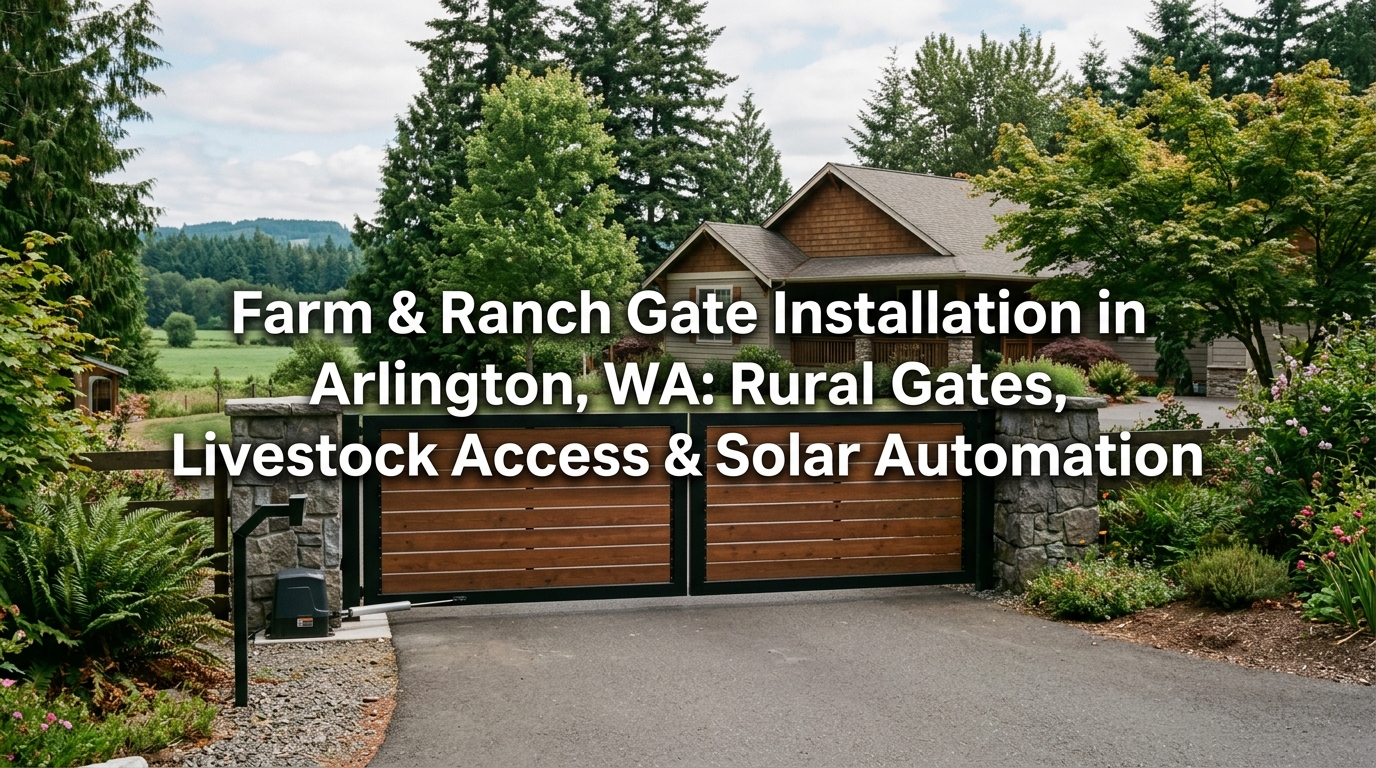
Farm gate installation Arlington WA growers and ranchers ask about is a different animal than a tidy city driveway gate. Out in the Stillaguamish Valley and the farm country around Arlington and Stanwood, a gate has to swing wide for a tractor, shrug off mud and gravel, run down a driveway that might be a quarter mile long, and keep livestock in while keeping trespassers out. A pretty picket gate does not survive that kind of life.
Working properties ask more of a gate than almost anything else. Trailers, hay trucks, feed deliveries, and heavy equipment come and go, often in the wettest, muddiest months of the year. The gate that handles all of that has to be built for the job, not pulled off a shelf.
Emerald Gate Systems is a locally owned, Washington-based gate company that builds, automates, and services gates for farms, ranches, and rural acreage across Snohomish County. This guide covers what farm gate installation in Arlington really takes, the gate types that hold up, and how to keep equipment and livestock secure on a working property.
Quick Answer: What Farm Gate Installation in Arlington Involves
Farm gate installation in Arlington means building a wide, heavy-duty gate that fits equipment access, then automating it with an operator and power that can handle a long rural driveway. A working farm gate covers the gate structure, deep footings for soft valley soil, a heavy-duty operator, and usually a solar or battery setup because the power panel is often far from the entrance.
The priorities are different from a suburban home. Width for trailers and tractors comes first. Durability against mud, gravel, and daily use comes second. Livestock control and security round it out. Because acreage varies so much, the right build always starts with a walk of the property.
Why Rural Gates Around Arlington Face Their Own Set of Problems
Farm country in the Stillaguamish Valley is beautiful, and it is hard on hardware.
The soil is the first issue. A lot of valley ground is soft, wet, and clay-heavy, and it shifts. A gate post set too shallow will lean within a couple of seasons, especially when it carries a heavy 20-foot leaf. Footings here have to go deeper and wider than a builder in a dry climate would ever bother with.
Then there is the driveway itself. Gravel and dirt approaches feed grit into every moving part, and a slide gate track packed with mud and rock will bind up fast. Long approaches also mean the electrical panel might sit hundreds of feet away, which changes the whole power plan.
Weather piles on. Months of rain rust cheap steel, seize up bargain hardware, and rot anything that was not built to drain. Winter windstorms knock out power right when you least want to hand-crank a gate open in a downpour.
And unlike a city lot, a farm gate has real jobs beyond looking good. It has to let a hay truck through, keep cattle from wandering onto the road, and slow down anyone eyeing the equipment shed. Planning around mud, weight, distance, and livestock is what separates a farm gate that lasts from one that fails by spring.
Planning a gate for acreage near Arlington or Stanwood? Emerald Gate Systems builds rural gates for real working conditions. Schedule a site visit and we will design one around your land.
What Goes Into a Gate That Can Handle a Working Farm
A farm gate is a system built for load and abuse. Here is what a solid rural install usually includes:
- A wide, heavy-duty gate in galvanized or powder-coated steel, sized for trailers and equipment
- Deep, reinforced footings that hold in soft valley soil
- A heavy-duty operator rated for a big, heavy gate and frequent use
- A power plan that fits the distance, often solar when trenching to a far panel makes no sense
- Battery backup so the gate runs through a winter outage
- Rugged access controls, from a simple keypad to remotes and phone entry
- Safety sensors that stop the gate for a person, animal, or vehicle in the path
Width is the number that drives everything. A pickup needs one thing, a tractor with an implement needs another, and a semi delivering feed needs more still. Measure for the biggest thing that regularly comes through, then add room.
Coating matters just as much out here. Galvanized and powder-coated steel fights the constant moisture that eats untreated metal. Skimp on the finish and you are repairing rust in a few years.
Emerald’s automatic gate systems service covers operators, solar setups, and automating a farm gate you already have.
Gate Types That Work for Farms and Acreage
There is no single right gate for a rural property. It depends on the opening, the ground, and the traffic.
Wide Swing Gates for Equipment Access
A single or double swing gate is the classic farm choice when there is room for it to open. Double leaves split a wide opening in half so each side stays manageable for the operator. Great for flat entrances with clear swing room, and simple to maintain.
Slide and Cantilever Gates for Gravel and Slopes
When the approach is tight, slopes uphill, or you do not want a gate swinging out over rough ground, a slide gate is the answer. Cantilever models are worth a hard look on a farm because they hang above the ground instead of rolling on a track, so mud, gravel, and standing water do not jam them. That is a real advantage in the valley.
Livestock and Cross-Fencing Gates
Keeping animals where they belong is its own design problem. Gates that tie into perimeter and cross-fencing need the right infill spacing so livestock cannot push through, plus latching that a curious cow or horse cannot work loose. Automated entry gates can pair with manual field gates so the main drive is secure while pastures stay flexible.
Pedestrian and Service Access
Hands are always coming and going on a farm. A separate walk-through gate or a smaller access point keeps foot traffic and quad runs from wearing out the main vehicle gate.
For a build shaped around your property instead of a catalog, Emerald’s custom gate design and fabrication is the right starting point.
Solar Gate Automation for Long, Off-Grid Driveways
Here is where rural gates really split from suburban ones. On a lot of acreage, the entrance sits far from the house and the power panel. Trenching electrical a few hundred feet through wet ground gets expensive fast.
Solar often wins that math. A solar-powered operator runs off a panel and battery right at the gate, with no long trench and no monthly draw on the meter. It also keeps working when a storm drops the grid, which happens every winter out here.
Solar is a strong fit when:
- The gate is far from usable power
- Trenching would cross a long or difficult run
- Outages are common and you want the gate to keep running
- Daily cycle counts are moderate rather than round-the-clock
For a high-traffic commercial dairy or a gate that cycles constantly, a wired setup may still make more sense. The only way to know is to look at how often the gate will run and how far the power is.
Not sure whether solar or wired fits your place? Emerald Gate Systems sizes the power plan to your driveway and your use. Ask for a consultation.
Keeping Equipment and Livestock Secure
Rural theft is real, and equipment sitting on open acreage is a target. A gate is the first and simplest layer of security for a farm.
A controlled entrance does a few things at once. It stops the casual drive-up, it slows down anyone who does not belong, and paired with cameras it gives you a record of who came through. For a property with tools, tractors, ATVs, or a fuel tank, that first barrier at the road is worth a lot.
Security layers that make sense on a farm include:
- An automated entry gate at the main drive
- Cameras at the gate and on outbuildings
- Keypad or phone entry so you control who has a code
- Remote alerts when the gate opens
- Bollards or barriers protecting fuel tanks, pumps, or equipment
Emerald’s access control systems tie keypads, cameras, intercoms, and remote entry into one setup you can actually manage from the house or your phone.
Signs Your Farm Gate Needs Repair or an Upgrade
A farm gate takes a beating, so it pays to catch trouble early. Watch for these:
- The gate sags or drags where the post has shifted in soft ground
- A slide gate binds on mud, gravel, or a fouled track
- The operator strains, stalls, or reverses under the load
- The gate is too narrow for equipment you now run
- Rust, bent rails, or cracked welds are showing
- Latches or infill no longer hold livestock reliably
- A worn-out manual gate has become a daily chore you would rather automate
Sometimes it is a footing reset or a new roller. Sometimes the gate has aged out and a wider, heavier build is the smarter move. Either way, catching it early keeps a working gate working.
For service on a rural gate, Emerald’s gate repair and maintenance handles diagnostics, footing and hardware repair, and operator service.
A Quick Word on Safety and Standards
An automated farm gate is a big, heavy, moving object, and safety is not optional. Recognized standards like ASTM F2200 cover how automated vehicular gates should be built, and gate operators are expected to include entrapment protection that reverses the gate when something is in the way.
On a farm, where kids, ranch hands, and animals move around the entrance, photo-eye sensors and reversing edges are worth every penny. A reputable installer builds them in as standard.
How Emerald Builds Gates for Working Properties
A good farm gate is mostly decided before the first post hole. Here is how a rural job runs with Emerald.
1. Walk the Property
We look at the entrance, the widest equipment that comes through, the soil, the driveway surface, the slope, and how far the power is. Farms have quirks a form never captures.
2. Design for Load and Width
We size the gate to your equipment and build it to survive valley conditions, with the coating and footings the ground actually demands. This is the custom gate design and fabrication stage.
3. Plan the Power
We weigh solar against a wired run based on distance and how often the gate cycles, and we spec a battery so a storm never strands you.
4. Set Up Access and Security
Keypads, remotes, phone entry, and cameras get matched to how your operation runs and who needs in.
5. Install, Test, and Support
We set the gate, wire the operator and controls, dial in the settings, and test it under real use. Down the road, gate repair and maintenance keeps rollers, footings, batteries, and sensors in shape.
Why a Local Washington Gate Company Matters for Ag Properties
A gate ordered from a national outfit does not know valley clay, a quarter-mile gravel drive, or a winter that runs on rain. A local crew does.
That local knowledge shows up in the details that make or break a farm gate: how deep to set a footing in soft ground, why a cantilever beats a track in mud, when solar makes more sense than trenching, and how to finish steel so it survives nine wet months a year.
Emerald Gate Systems is a Washington State licensed, bonded, and insured contractor, and its About page lays out the full range, from custom rural gates to full security integration built for this region. A local company is also here when a storm knocks your gate offline, and it understands how a working property near Arlington actually operates. Reliable farm gate installation Arlington WA landowners can count on comes from a crew that knows the ground.
Ready to secure your acreage? Emerald Gate Systems designs farm and ranch gates, automation, and security for Arlington, Stanwood, and the wider Snohomish County area. Schedule a free consultation.
For the bigger picture, our complete guide to automatic gate installation in Northwest Washington walks through planning, permits, power, and the full installation process.
For permits, site conditions and what to include in a quote request anywhere in the county, see our guide to Snohomish County automatic gate installation.
Farm and Rural Gate FAQ
How much does a farm gate installation cost in Arlington, WA?
Cost depends on the gate width and material, the operator, the power plan, and site conditions like soil and driveway length. A wide equipment gate with solar automation on a long drive is a different project than a short wired entrance. The reliable way to price it is a site visit and written quote, which Emerald Gate Systems offers as a free consultation.
How wide should a farm or equipment gate be?
Wide enough for the biggest thing that regularly comes through, plus room to spare. Many farm gates run 16 to 20 feet or more to clear tractors with implements, trailers, and delivery trucks. Measuring your actual equipment is step one, and a double swing or a slide gate can cover wide openings without overloading a single leaf.
Can a farm gate run on solar power?
Yes, and it often should. Solar-powered operators are a strong fit for long rural driveways where the power panel is far from the entrance, and they keep running during the winter outages that are common in this area. For very high-traffic gates, a wired setup may be better, so the choice comes down to distance and how often the gate cycles.
What gate holds up best on muddy, gravel driveways?
Cantilever slide gates are a favorite for muddy or graveled rural entrances because they hang above the ground instead of rolling on a track, so debris and standing water do not jam them. Heavy swing gates also work well where there is room to open, as long as the footings are set deep enough for soft valley soil.
Can you automate the manual farm gate I already have?
Often, yes. If the gate is straight, well built, and properly supported, it can usually take an operator and access controls. If it sags, is too heavy, or the posts have shifted, it may need reinforcement or a footing reset first. Emerald’s automatic gate systems service covers these rural retrofits.
Will a gate really help keep livestock and equipment secure?
A controlled entry gate is the first and simplest security layer on a farm. It stops casual drive-ups, slows down anyone who does not belong, and paired with cameras and keypad or phone entry it gives you control and a record of who comes through. For pastures, it works alongside your perimeter and cross-fencing.
Do you serve farms outside Arlington?
Yes. Emerald Gate Systems is Washington-based and serves Arlington, Stanwood, and farm and rural properties across Snohomish County and the greater Puget Sound region.
Talk to a Rural Gate Specialist
If you run a farm, ranch, or acreage near Arlington and your entrance needs a real gate, start with a conversation about the property. Emerald Gate Systems will walk the site, measure for your equipment, and give you an honest quote. Call today or schedule a free consultation. Locally owned, built for Pacific Northwest ground, and here for the long haul.